
When a bank repossesses a vehicle from a customer who has defaulted on EMIs, the asset is not simply parked at a convenient location. It is moved to a stockyard, where it becomes the bank’s responsibility until it is sold, released, or otherwise disposed of.
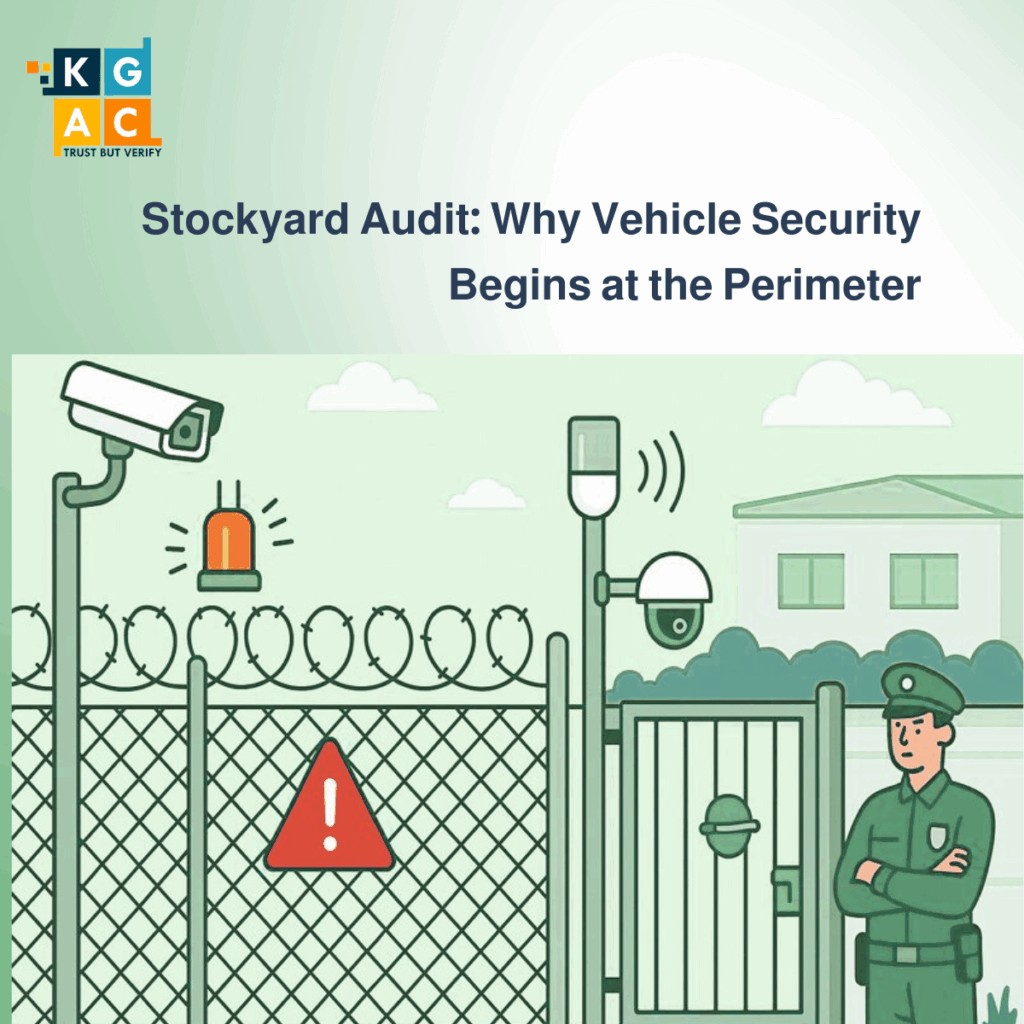
A vehicle is not just a machine; for the bank, it is a recoverable value. Yet in many cases,𝘁𝗵𝗶𝘀 𝘃𝗮𝗹𝘂𝗲 𝘀𝗶𝘁𝘀 𝗯𝗲𝗵𝗶𝗻𝗱 𝗮 𝗯𝗼𝘂𝗻𝗱𝗮𝗿𝘆 𝘄𝗮𝗹𝗹 𝘁𝗵𝗮𝘁 𝗶𝘀 𝗻𝗼 𝗵𝗶𝗴𝗵𝗲𝗿 𝘁𝗵𝗮𝗻 𝟲 𝗳𝗲𝗲𝘁. Such a wall does little to discourage intruders. The stockyard audit therefore begins not with paperwork, but with a walk along the perimeter.
The presence of security guards is equally important. But a guard cannot be effective if his family is living in the yard or using the parked vehicles casually. There have been instances where children play inside yards, climbing on repossessed two-wheelers or using cars as a resting place. These seemingly small activities cause scratches, dents, or mechanical issues. A proper stockyard audit flags such misuse immediately.
Lighting is another critical part of perimeter security. A poorly lit yard becomes a soft target after sundown. Auditors look for working floodlights, adequate coverage, and reliable backup in case of power failure
Perimeter checks go beyond the physical wall. CCTV coverage is today considered non-negotiable. An audit verifies that cameras are placed at strategic locations covering entry, exit, and parking rows, that they are functional, and that footage is retained for at least 30 days. Auditors also request playback samples to confirm the system is not symbolic but truly working.
Insurance ties perimeter security with financial accountability. Auditors cross-check the insurance certificate, renewal dates, and policy scope. Without it, even the strongest gate or wall cannot protect the bank financially if disaster strikes.
Another key check is whether the stockyard premises are being misused. Some yards double up as garages, workshops, or even residential quarters. This exposes vehicles to avoidable damage and creates legal and compliance issues.
At the end of a perimeter-focused audit, banks receive a clear picture: Are their repossessed vehicles protected against external risks? Are intruders deterred? Is there reliable monitoring in place? Are the guard arrangements professional and not diluted? These findings form the foundation of the audit report.
𝗪𝗶𝘁𝗵𝗼𝘂𝘁 𝘀𝘁𝗿𝗼𝗻𝗴 𝗽𝗲𝗿𝗶𝗺𝗲𝘁𝗲𝗿 𝗮𝗻𝗱 𝘀𝗲𝗰𝘂𝗿𝗶𝘁𝘆 𝗰𝗵𝗲𝗰𝗸𝘀, 𝗲𝘃𝗲𝗻 𝘁𝗵𝗲 𝗯𝗲𝘀𝘁 𝗱𝗼𝗰𝘂𝗺𝗲𝗻𝘁𝗮𝘁𝗶𝗼𝗻 𝗮𝗻𝗱 𝗿𝗲𝗰𝗼𝗿𝗱-𝗸𝗲𝗲𝗽𝗶𝗻𝗴 𝗯𝗲𝗰𝗼𝗺𝗲 𝗺𝗲𝗮𝗻𝗶𝗻𝗴𝗹𝗲𝘀𝘀. A stockyard audit reminds stakeholders that the first and most basic responsibility in safeguarding repossessed vehicles begins not with registers or release letters, but with a simple question: is the yard secure enough to hold them safely?